Showing posts with label Roald Dahl. Show all posts

Tuesday, 21 August 2012

Interview #5: Kara Lebihan

Kara Lebihan's Mrs Vickers' Knickers helping a sailing boat win first place. Thanks to Deborah Allwright for allowing us this early peek at one of her illustrations from the forthcoming book

If there was an award for dedication to a writing dream and never giving up, then Kara Lebihan would walk it.

Success has been a long time coming, but it’s nearly here.

Her first book, Mrs Vickers' Knickers will be published next year by the mighty Egmont. The picture book for young children is fewer than 200 words, but a lifetime of striving and working hard at her craft is woven into every sentence.

The illustrations have been done by the brilliant Deborah Allwright, best known for The Night Pirates.

Kara Lebihan
Kara spoke to me on the phone from her parents’ home in the north east during her first visit to the UK since she, her husband and seven-year-old son Hugh moved to China a year ago.

She is the deputy head teacher of the British School in Beijing. They moved, she says, because they were looking for adventure.

They love living out there.

Writing has always been a part of Kara’s life.

“It’s that cliché – I remember saying as a child ‘I want to be a writer’.

“I’ve got some novels I wrote as a child in storage in Manchester (where they were living before they moved east).

“After that I went to secondary school and the writing went dead, but it was still in my mind. I went to university in Newcastle and then trained to be a teacher and in 1994 I started to take it a bit more seriously.”

She and her husband lived in the Far East for a number of years. She remembers sitting on a bus in Singapore writing some notes for a story on the back of her ticket.

She got the idea for a picture book – Jumper for Zak – about a grandmother knitting themed jumpers for members of the family, such as the librarian mum and gardener dad, but not having an idea of what to knit for Zak, before finding the solution and knitting all through the night.

Kara paid an Australian editor to read a variety of her work.

“She basically tore it apart but liked Zak. She suggested I work up a portfolio of three or four picture book ideas to send out to publishers.

A long, arduous road of creativity and disappointment now lay before Kara for the next few years.

She sent ideas to every agent in the Writers and Artists Handbook and every one came back rejected.

Kara persisted, buying each new W&A Handbook as it was published annually. One year there was a new agent’s name in the list: Eve White.

Kara sent her work to Eve. And waited.

Eventually, among all the rejections came a call from Eve who phoned to say she liked an idea of Kara’s called Mrs Butler's Frog about a family who can hear a frog croaking in their house and hunt high and low for it.

“Eve said if I changed the ending she would have a think about it. I did, but she didn’t think the new ending was funny enough.”

She eventually came up with a conclusion that satisfied Eve.

Many people assume that once an agent takes you on, publication, fame and fortune will naturally follow. Not so, says Kara.

Kara was taken on by Eve in 2006 and her first picture book – Mrs Vickers' Knickers - should be published next year. That's a long time to wait for your dream to come true. But persistence is the hallmark of success.

Inspiration for the book came when she was pushing Hugh in his pram around Hale, near Altrincham, where they were living. She spotted a sock lying on the pavement and wondered why it was that stray pieces of people's clothing were often to be found lying in the street or in a tree or draped over a gate or railing.

Agent Eve told her it was good to be rude, so Kara changed the sock into a pair of knickers - Mrs Vickers' to be precise.

Once she'd had that spark of an idea, Kara tried to imagine the journey the knickers had been on. She pictured all kinds of crazy scenarios before the knickers wound up coming back to their owner.

"Apparently rude is in these days," laughed Kara, though she should hardly be surprised given that Roald Dahl, the master of bad taste, was the biggest influence on her as a child.

In an exclusive for Bookengine, the picture at the top of this blogpost is Deborah Allwright's gorgeous interpretation of Mrs Vickers' knickers winning a boat race.

"The knickers are taking the boat into first place in place of a sail," said Kara.

Kara Lebihan now deserves to sail into the forefront of picture book authors.

* My thanks to Kara for speaking to Bookengine. Thanks also to Deborah Allwright and Egmont for allowing me to reproduce the illustration from Mrs Vickers' Knickers.

You can visit Kara's author's page at Eve White's website here
Visit Deborah Allwright's website here. And Egmont's website is here.

Tuesday, 3 July 2012

Writers who DID give up the day job

My daughter spent some book vouchers at the weekend and one of the titles she bought was Roddy Doyle’s new children’s book, Greyhound of a Girl, interestingly a ghost story.


The book my daughter bought
I’ve not read it, but once she’s finished, I’ll borrow it.

Doyle’s earlier stories for younger readers, The Rover Adventures, are very funny, scatalogical, and break the fourth wall (if such a thing is possible in a book) in ways that would have made fellow Irish comic fantasists Flann O’Brien and Spike Milligan proud.

Of course, Doyle’s best known for his classic grown-up novels set in Barrytown, notably The Commitments.

The versatile Roddy Doyle
But when he became a parent, writing something for his children was a natural step.

It got me thinking about other writers established in different genres who have dipped their nibs into children’s fiction.

Frank Cottrell Boyce's first children's book
Frank Cottrell Boyce began as a scriptwriter on TV soaps like Brookside and Coronation Street, moving into film with the screenplays for Welcome to Sarajevo and 24-Hour Party People.
Then he wrote a script for director Danny Boyle. It was called Millions and featured two young brothers.

The story was crying out to be a children’s book. So Frank wrote it. It won him the Carnegie Medal and took the screenwriter on a very successful and unexpected detour, turning him into a bona fide children’s author.

Mr Cottrell Boyce himself
More children’s books have followed and recently he was asked by the Ian Fleming estate to write a sequel to Chitty Chitty Bang Bang.

Things are certainly very rosy for Frank at the moment.

Colin Bateman quit his job as a journalist on a local weekly newspaper in Northern Ireland when his crime novels started to take off. Always prolific, Colin soon found that he wanted to write books for children too, deploying his talent for punning titles, such as Reservoir Pups.

Another crime writer, Carl Hiaasen (also an award-winning crusading newspaper columnist who keeps the wrongdoers of Florida on their toes) has done the same as Bateman, spinning his distinctive style of hard-boiled humour for a younger audience. Hoot! is his best known children's book.

Unexpected tale of Mr Dahl
But perhaps the greatest example, of course, is Roald Dahl. Before he published James And The Giant Peach, he was best known as the author of wonderfully sly, black and sophisticated tales of the unexpected published mostly in magazines such as the Saturday Evening Post.

It’s debatable whether Dahl would still be remembered now if that was all he had published.

Writing a children’s book was the shrewdest move he made.

Tuesday, 26 June 2012

Childlike writers who escape reality

Writing is a solitary activity. Not all, but many writers are shy, retiring people who best express themselves through the written word.

A lot of children’s authors have used their stories as a way of insulating themselves against the real world. Many never really grow up, despite their seemingly sober, grownup outer appearances.

Perhaps this is the main quality that connects our greatest children's writers. 

J M Barrie
For many, J M Barrie is the epitome of the children's author who never wanted to leave childhood behind. He, after all, created Peter Pan, the boy who never grew up. Perhaps Barrie's psyche was scarred when his older brother David died aged 14 and he tried - in vain - to replace him in his mother's affections. Was it from this tragedy that sprang the idea for the boy who never grew up?

Hans Christian Andersen
Hans Christian Andersen was another childlike and naive man. He never married and was uncomfortable around women. He was essentially a child in an adult's body.

Kenneth Grahame
Kenneth Grahame wanted life always to be like his childhood growing up close to the river in Cookham, Berkshire, where he had first learned to escape the harshness of the real world (his mother died young and Grahame and his siblings were sent to live with their grandmother). He became a bank worker, rising to become Governor of the Bank of England, a respectable and, dare I say, dull post? Was this an act of escape for the man who based the timid Mole upon himself? Despite dramatic and tragic incidents in his life - he survived a shooting incident at the bank and his son committed suicide - Grahame did not seek adventure, forever wanting to inhabit the cosy, safe world of Mr Toad, Ratty and Mole in the Wind in the Willows.

Lewis Carroll
Some authors – Lewis Carroll, Dr Seuss – seek refuge further by hiding behind pseudonyms. For them, does the creation of this extra layer, a protective skin, provide another way of keeping reality at bay?

Dr Seuss – Theodor Seuss Geisel to give him his real name – was certainly very bashful, with a pathological fear of speaking in public. On the rare occasions he did give public addresses, he resorted to reading a comical rhyme – albeit touched by Seussian magic – in place of a speech. There is a short, but very revealing video clip on YouTube of Seuss smiling at, but saying nothing to, an interviewer late in his life in San Diego.

He never lost his childlike playfulness. Many stories abound of his childlike naughtiness, recounted in the excellent book by Judith and Neil Morgan, Dr Seuss and Mr Geisel. One particular favourite of mine was the time he went into a shoe shop and switched all the stickers indicating what size of shoes were on display.

Lewis Carroll was the pseudonym of Charles Lutwidge Dodgson, a brilliant, reserved and reticent Oxford mathematics don. He was a man with two sides. On one hand he was Dodgson, the quiet, shy, reserved Victorian gentleman bachelor, a genius in his field. On the other he was Carroll, the dazzlingly creative author of Alice in Wonderland, possessed of a quicksilver wit shot through with a bizarre and darkly comic imagination. The pen name Lewis Carroll clearly allowed the mild mannered mathematician and logician from Cheshire to release his wild and childlike side while offering him the ability to return to the quiet, dusty world of academia when it all became a bit too crazy.

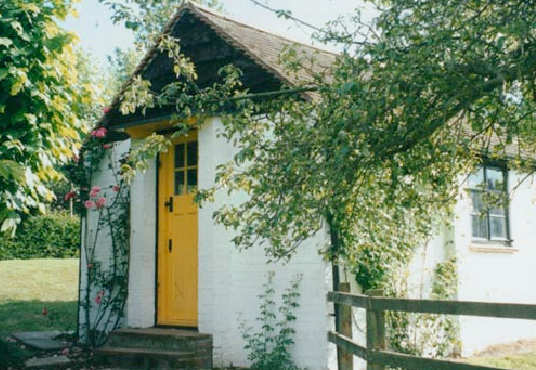
Roald Dahl's writing hut
One could never describe Roald Dahl as shy and retiring. He was the opposite - belligerent, opinionated, domineering. Yet he never lost the ability to recall what it was like to be a child and this is evident in what he wrote.

Nevertheless, like these other authors, he had the desire to escape into his writing. How else do you explain his desire each morning to seek refuge in his little whitewashed, yellow-doored shed at the bottom of his garden where he would sit in an old armchair and swaddle himself in an old sleeping bag so that he had created for himself a womb-like workspace?

There are other authors, of course, not all children's writers - here I'm thinking of P G Wodehouse and Charles Schulz - who escaped into their own childlike fantasy worlds.

So, who would you include in the list?

Wednesday, 28 July 2010

Fantastic Mr Dahl - 20 years on

It's hard to believe but this year it's 20 years since Roald Dahl died.

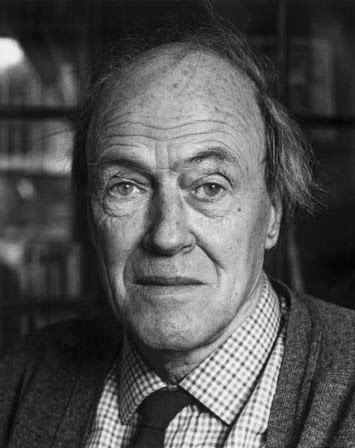
Roald Dahl, 1916-1990
Generations of children have grown up on his stories and if proof were needed of his continued influence, I was served some on a plate this week.

I was in a bookshop when an enthusiastic young boy - aged six or seven - wandered in with a grandparent and asked where he could find the Roald Dahl books.

I think Fantastic Mr Fox was the first Dahl book I read - it had the pre-Quentin Blake illustrations, so it must have been 1975 or 1976.

I then devoured Charlie and the Chocolate Factory before working my way through the rest that had been published at that time.

In my teens I discovered his grown-up stories, the wonderfully macabre Tales of the Unexpected, and promptly became addicted.

I still have my well-thumbed hardback collection of them on my bookshelf.

The TV adaptations shown on ITV on Sunday nights in the late 1970s were a guilty pleasure (when I could convince my parents to let me stay up and watch them).

In 1989 I had a short spell training to be a teacher before realising I wasn't cut out for the job, switched courses and launched myself into the world of journalism instead.

But during the few weeks I actually did teaching practice (in a multi-cultural primary school in Blackburn) I read the children The Witches, which had just been published. It was a delight to see Dahl's storytelling working its magic on the youngsters.

In 1990 I considered writing a fan letter to Dahl. So I acquired his address - Gipsy House in Great Missenden - from the college library.

But for some reason I put off actually committing pen to paper. It's something I've regretted ever since, for he died that November.

In 1999 I made a Roald Dahl pilgrimage to Great Missenden with my wife, herself weened on his books.

Dahl's writing shed at Gipsy House
We found our way to Gipsy House, a beautiful rambling whitewashed Georgian house, along a winding country lane, and spied the fabled writing shed with the yellow door in the back garden where Dahl conjured up those wonderful works of fiction.

In the lane at the side of the house we were greeted by an old-looking Jack Russell terrier that sniffed inquisitively at our feet before being called to heel by its owner, a dark-haired lady in her fifties.

Dahl with two pets - Chopper the Jack Russell is on the left
It was later we realised the lady was the author's widow Felicity and the dog Dahl's beloved pet, Chopper.

We then paid our respects by visiting Dahl's grave in the churchyard of Saint Peter and Paul Church on the hillside opposite the village, reached via a footbridge across a busy dual carriageway.

In those days the grave was marked by a simple, small memorial plaque. Chocolate bars had been placed on the grave by fans in tribute to their chocoholic hero.

My wife and I have often talked about that visit over the years. So in October 2008 during a trip to the London area to celebrate my fortieth birthday we took our two young children to Great Missenden.


Roald Dahl also wrote macabre short stories for adults
 Our daughter has read a few Dahl books, her favourite being Charlie and the Chocolate Factory, so she was excited about visiting the village where he lived and worked.
The Roald Dahl Museum and Story Centre, in Great Missenden
The main appeal this time around was the new Roald Dahl Museum and Story Centre.

It can be found on the high street in the village, close to various buildings and landmarks associated with the great author's stories, including the old-style petrol pumps from Danny the Champion of the World, and the building that was Sophie's 'norphanage' in The BFG.

Besides being a state-of-the-art repository for his letters and manuscripts, the museum is a brilliant tribute to the great man entirely in keeping with his spirit.

His life story is told in a variety of rooms with fascinating displays. I particularly loved one of Dahl's monstrous sandals which he sent to illustrator Quentin Blake as a model for the BFG's footwear.

Chief among the exhibits is in the main part of the museum - an exact recreation of Dahl's writing shed, complete with armchair, green baize-covered writing board and 'memento-table' with the head of his femur acquired during a hip replacement operation and a foil ball from all the bars of chocolate Dahl ate over the years.
Dahl at work in his writing shed

Children cannot fail to be seduced by the activities on offer - they're given the opportunity to create their own BFG-style nonsense words and are given tips on how to write their own stories.

There are also storytelling workshops, where the children are treated to performances of Dahl's rhymes by museum staff.

The day we visited, Great Missenden was covered in snow. After the museum, we trudged up the lane to Gipsy House, which looked gorgeous blanketed in white.

In the nine years since our previous visit, fences had been erected around the property, which meant we couldn't see the writing shed.

There was no sign of Mrs Dahl on this occasion while Chopper no doubt had long gone to meet his master in heaven.

But we paused under the railway bridge on the country lane where Dahl used to take his children at night to listen to the last train to London thundering overhead while telling them ghost stories.

Roald Dahl's grave
We finished our trip by revisiting the author's grave. Naturally, the churchyard was completely white, but the grave was easy to find as a wonderful slab tombstone now adorned the plot.

  And perhaps the sweetest thing of all were the concrete BFG footprints leading to Dahl's grave from a commemorative bench nearby, bearing a lovely quote from The Giraffe and the Pelly and Me.


The BFG's footprints
 If you are a fan of Roald Dahl, I can't recommend a visit to Great Missenden highly enough. And in this anniversary year, surely there is no better time.